
21 January 2016
DARPA Working on Informateur?
A recent Newsweek headline: U.S. MILITARY PLANS CYBORG SOLDIERS WITH NEW DARPA PROJECT
Sounds like the precursor to an Informateur to me. Be interesting to see where this goes.
What's an Informateur? Check out my webserial Perfect to find out.
Want more Perfect episodes? Let me know by leaving a comment below.
DARPA announced its intentions of eventually building a chip no larger than one cubic centimeter, or two nickels stacked back to back, that can be implanted in the brain. The chip would act as a neural interface by converting electrochemical signals sent by neurons in the brain into the ones and zeros used in digital communications.
Sounds like the precursor to an Informateur to me. Be interesting to see where this goes.
What's an Informateur? Check out my webserial Perfect to find out.
Want more Perfect episodes? Let me know by leaving a comment below.
08 July 2015
Writing Book Review: The Artful Edit by Susan Bell
The Artful Edit: On the practice of editing yourself ©2007 by Susan Bell
To date, the best book on editing, and maybe the art and craft of writing, I’ve read.
Strengths:
Weaknesses:
Bottom Line:
Reaction:
Bell’s style is approachable and relatable: it’s easy for a writer/reader to say, “Okay, this is what I need to be doing when I’m editing my own work.” She also goes a step farther and suggests that if one method isn’t working, here are (about) eleven others to try. And while the final two chapters provided less ‘usable’ insight for me, others will find value in a look at how a sound editor or other writers work through the editing process.
The most important take away is writers need a systematic approach to viewing their work and engaging in the editing process. Unless one is willing to pay for extensive editing – almost wrote expensive editing, a useful Freudian slip – authors must edit their own work well. There is too much competition for space for that short story and novel. Even if the publisher is still paying for editorial services, it is likely that much less attention will be given your piece than in the past. [Interesting note: this is the gist of the final chapter, so maybe it’s more ‘useful’ than I’ve lead you to believe.] Simply put: if they like your work but it needs extensive editing before publication it’s just that much easier to give it a pass. Learning how to self-edit is as crucial as knowing when to show and when to tell.
So what’s the difference between a macro and micro edit you asked? A macro-edit is the big picture. In Bell’s words: “Intention, Character, Structure, Foreshadowing, Theme, and Continuity of tone. A micro-edit looks at the detail: “Language, Repetition, Redundancy, Clarity, Authenticity, Continuity, Show and tell, Beginnings/endings/transitions”. That’s an outline of the meaty middle of her text. Her first chapter, “Gaining Perspective” offers eleven methods one can use – mix and match to suit your needs and tastes.
To date, the best book on editing, and maybe the art and craft of writing, I’ve read.
Strengths:
- Not pedantic – stresses that each writer will need to find what works for her
- Lays out techniques, provides examples and studies
- Discusses general editing concepts (macro vs micro editing) and offers a “Diagnostic Checklist” for each
Weaknesses:
- Some writers will find Bell’s discussion too vague desiring more tips, tricks, and secrets than this generalized discussion of what one should be thinking about when self-editing (or even editing another’s work)
- The final two (of five) chapters are interesting though the least useful
Bottom Line:
- Absolutely worth checking out from your local library
- Consider purchasing a copy, new for under $15 or used for under $5
Reaction:
Bell’s style is approachable and relatable: it’s easy for a writer/reader to say, “Okay, this is what I need to be doing when I’m editing my own work.” She also goes a step farther and suggests that if one method isn’t working, here are (about) eleven others to try. And while the final two chapters provided less ‘usable’ insight for me, others will find value in a look at how a sound editor or other writers work through the editing process.
The most important take away is writers need a systematic approach to viewing their work and engaging in the editing process. Unless one is willing to pay for extensive editing – almost wrote expensive editing, a useful Freudian slip – authors must edit their own work well. There is too much competition for space for that short story and novel. Even if the publisher is still paying for editorial services, it is likely that much less attention will be given your piece than in the past. [Interesting note: this is the gist of the final chapter, so maybe it’s more ‘useful’ than I’ve lead you to believe.] Simply put: if they like your work but it needs extensive editing before publication it’s just that much easier to give it a pass. Learning how to self-edit is as crucial as knowing when to show and when to tell.
So what’s the difference between a macro and micro edit you asked? A macro-edit is the big picture. In Bell’s words: “Intention, Character, Structure, Foreshadowing, Theme, and Continuity of tone. A micro-edit looks at the detail: “Language, Repetition, Redundancy, Clarity, Authenticity, Continuity, Show and tell, Beginnings/endings/transitions”. That’s an outline of the meaty middle of her text. Her first chapter, “Gaining Perspective” offers eleven methods one can use – mix and match to suit your needs and tastes.
29 October 2014
Perfect, Episode Forty ♦ Howling Wind
Part Two of Perfect draws to a close with publication of
Perfect, Episode Forty ♦ Howling Wind
I hope you've enjoyed reading Perfect. Part Three is planned for 2015 - please use the "Follow on" links to the right to be notified when the next episode is available.
It's also important to thank a few people for their help in bringing you Part Two. I'm indebted to my friendly librarian Judith and her friend Pam for assistance on the final section of Episode Forty. Don't know how I could have written it without Judith's advice and feedback. Writing may be a solitary endeavor, but creation stems from contact with others.
Critique partners from Westside Writers also provided wonderful, useful feedback as I was developing each episode in Part Two.
Thank you April, Gayle, Judith, Marilyn, Mike and Pat, Pam, Rebecca, Walt, Whitney, and Vanessa.
Perfect, Episode Forty ♦ Howling Wind
I hope you've enjoyed reading Perfect. Part Three is planned for 2015 - please use the "Follow on" links to the right to be notified when the next episode is available.
It's also important to thank a few people for their help in bringing you Part Two. I'm indebted to my friendly librarian Judith and her friend Pam for assistance on the final section of Episode Forty. Don't know how I could have written it without Judith's advice and feedback. Writing may be a solitary endeavor, but creation stems from contact with others.
Critique partners from Westside Writers also provided wonderful, useful feedback as I was developing each episode in Part Two.
Thank you April, Gayle, Judith, Marilyn, Mike and Pat, Pam, Rebecca, Walt, Whitney, and Vanessa.
15 October 2014
Perfect, Episode Thirty-nine ♦ Harvest Festival
Anita's been a bit moody, but now it's time for change.
Perfect, Episode Thirty-nine ♦ Harvest Festival
Perfect, Episode Thirty-nine ♦ Harvest Festival
01 October 2014
Perfect, Episode Thirty-eight ♦ Anita's Day
Has another fortnight gone by? Am I really publishing the thirty-eighth episode of Perfect, editing the thirty-ninth, and tweaking the first full draft of episode forty - the biggest cliff hanging, Part Two closing, season finishing, OMG ending for 2014? Yes. All around, the answer is yes. I'm a tiny bit overwhelmed by the enormity of it all, but pretty excited and pleased.
So this week George and Anita have settled into life in a future Red Cloud firmly rooted in an age long since passed into our own history. He followed her from a comfortable life in civilization to a new, unimagined, impossible life in the Great North American Wilderness Park. So what do they do all day? How's he dealing with the change? And exactly what does Anita think about it all? Find out in
Perfect, Episode Thirty-eight ♦ Anita's Day
So this week George and Anita have settled into life in a future Red Cloud firmly rooted in an age long since passed into our own history. He followed her from a comfortable life in civilization to a new, unimagined, impossible life in the Great North American Wilderness Park. So what do they do all day? How's he dealing with the change? And exactly what does Anita think about it all? Find out in
Perfect, Episode Thirty-eight ♦ Anita's Day
16 September 2014
03 September 2014
Perfect, Episode Thirty-six ♦ Carl Marpole
Published the new episode of Perfect yesterday. Catch up on what's happening to George and Anita on their quest to find Red Cloud. Did Willem send them the clues? Is he in Red Cloud? Will they stay or hit the road again?
Enjoy the next episode today!
Perfect, Episode Thirty-six ♦ Carl Marpole
Only four episodes remain in Part Two of Perfect and I promise Episode Forty will be big - not longer, but something very important will happen. Are you ready for it?
Enjoy the next episode today!
Perfect, Episode Thirty-six ♦ Carl Marpole
Only four episodes remain in Part Two of Perfect and I promise Episode Forty will be big - not longer, but something very important will happen. Are you ready for it?
20 August 2014
Perfect, Episode Thirty-five ♦ Red Cloud
George and Anita are almost there!
After a rescue by some good folk from the town of Friorby, they've set off on the last leg of their journey. Across half the continent, they're in the middle of the Great North American Wilderness Park (GNAWP) - the depopulated area between the Mississippi River and the Sierra Nevadas & Cascades. But just as man is part of nature, there are people living in the wilderness much like people did in the early 1800s. Technically still a part of the Industrial Confederation, in the GNAWP there are no Informateurs and De Authoriteit does not exercise control.
As early as Episode Four ♦ Dreams, Avinashika (now known as Anita) dreamt of a red cloud. A recurrent image, in Episode Twenty-five ♦ Trade Beads Anita and George received their last clue: "My pioneers. West. Find me under a red cloud." It took the help of Clearie and a visit to Concordia to figure out where they needed to go.
Do George and Anita make it to Red Cloud? Find out in
Perfect, Episode Thirty-five ♦ Red Cloud
After a rescue by some good folk from the town of Friorby, they've set off on the last leg of their journey. Across half the continent, they're in the middle of the Great North American Wilderness Park (GNAWP) - the depopulated area between the Mississippi River and the Sierra Nevadas & Cascades. But just as man is part of nature, there are people living in the wilderness much like people did in the early 1800s. Technically still a part of the Industrial Confederation, in the GNAWP there are no Informateurs and De Authoriteit does not exercise control.
As early as Episode Four ♦ Dreams, Avinashika (now known as Anita) dreamt of a red cloud. A recurrent image, in Episode Twenty-five ♦ Trade Beads Anita and George received their last clue: "My pioneers. West. Find me under a red cloud." It took the help of Clearie and a visit to Concordia to figure out where they needed to go.
Do George and Anita make it to Red Cloud? Find out in
Perfect, Episode Thirty-five ♦ Red Cloud
06 August 2014
Perfect, Episode Thirty-four ♦ Black Miners
It's still Tuesday, 5 August in Alaska when I posted this, right?
Well then, here's the next episode of Perfect, ready for you to read online:
Perfect, Episode Thirty-four ♦ Black Miners
Or maybe you prefer to read this episode as a PDF file?
You may also download all episodes currently available in a single PDF.
Enjoy!
Well then, here's the next episode of Perfect, ready for you to read online:
Perfect, Episode Thirty-four ♦ Black Miners
Or maybe you prefer to read this episode as a PDF file?
You may also download all episodes currently available in a single PDF.
Enjoy!
22 July 2014
Perfect, Episode Thirty-three ♦ Well Water
I'm happy to announce that a new episode is available on my website.
Perfect, Episode Thirty-three ♦ Well Water
Perfect, Episode Thirty-three ♦ Well Water
21 July 2014
Removing Semalt from Google Analytics
If you use Google Analytics, you may have seen "semalt.semalt.com" as a source of some of your web traffic. Depending on how much traffic you get to your site, these visits from Semalt's crawler might skew your stats.
If you don't like that, there's a simple solution:
One note: if you use subdomains (eg: blog.mydomain.com and www.mydomain.com) you will need to enter each of those domains in the form - use the enter key to go to the next line.
I used the form a week ago. Sure enough, Semalt has dropped off my stats (as well as all these bizarre instant views from a number countries around the world). So as far as I can tell, this isn't spambait, just a group of folks in the Ukraine trying to make a living - too bad their website isn't a bit more user friendly. I had to spend more time searching for the above link than I liked.
If you don't like that, there's a simple solution:
- Go to http://semalt.com/project_crawler.php
- Add your URLs in the form provided at the bottom of the page
- Click the remove button.
One note: if you use subdomains (eg: blog.mydomain.com and www.mydomain.com) you will need to enter each of those domains in the form - use the enter key to go to the next line.
I used the form a week ago. Sure enough, Semalt has dropped off my stats (as well as all these bizarre instant views from a number countries around the world). So as far as I can tell, this isn't spambait, just a group of folks in the Ukraine trying to make a living - too bad their website isn't a bit more user friendly. I had to spend more time searching for the above link than I liked.
09 July 2014
Perfect, Episode Thirty-two ♦ The Fork
Now available
Perfect, Episode Thirty-two ♦ The Fork
Please let me know if you enjoy Perfect. Leave a comment below or visit Perfect's Facebook page.
Perfect, Episode Thirty-two ♦ The Fork
Please let me know if you enjoy Perfect. Leave a comment below or visit Perfect's Facebook page.
25 June 2014
Perfect, Episode Thirty-one ♦ Another View
Now available
Perfect, Episode Thirty-one ♦ Another View
Sorry for the delay, but it just wasn't ready for publication yesterday as planned.
Thanks for your continued support.
Perfect, Episode Thirty-one ♦ Another View
Sorry for the delay, but it just wasn't ready for publication yesterday as planned.
Thanks for your continued support.
11 June 2014
27 May 2014
Perfect, Episode Twenty-nine ♦ Saint Jo
George and Anita are spending some time with their new friend Clearie in Saint Jo near the Missouri River. Both Anita and George are trying to figure out what to do next. They could stay in Saint Jo, but there is always the final outstanding clue ‘My pioneers. West. Find me under a red cloud.’
Now available
Perfect, Episode Twenty-nine ♦ Saint Jo
Now available
Perfect, Episode Twenty-nine ♦ Saint Jo
22 May 2014
Writing Book Review: Immediate Fiction by Jerry Cleaver
Immediate Fiction: A Complete
Writing Course
by Jerry Cleaver
Strengths:
Weaknesses:
Bottom Line:
Reaction:
Overall I thought this was a worthwhile read (from the library). Will see if I say, “Gosh, really need a copy to go through the chapter on overcoming writer’s block.” Or maybe something else. I did write down his basic formula (get the book if you want to know what it is) to keep what I’d call his Five Elements of a Successful Story (again, read the book, it applies to everything: short story, novella, novel, play, screenplay, graphic novel, etc) front and center and made some notes – other titles and a couple websites. So that was useful.
Okay, so one of the elements is conflict, but you already guessed that. Here’s my take, my words, of what he’s telling us to do: Don’t just have your character lose his job. Have his boss fire him. And while you’re at it, don’t just have the boss say, “Joe, we need to make some cutbacks. Sorry to see you go…” NO! We need to really pile it on. So not only does Joe’s boss get all nasty, “I’m firing your worthless butt and reporting you to the state regulator for gross misconduct so you’ll never work again.” THEN the mean old boss will conspire with another employee to file a sexual harassment suit against poor Joe AND, just in case that isn’t quite enough drama and conflict for Joe to overcome, let’s go ahead and fill his computer with child porn and call the cops.
Poor Joe!
UGH! Poor reader. When I see this sort of stuff – in print, online, on TV, at the movies – I lose interest and quick. It goes beyond realistic and believable. Maybe that’s enjoyable for others – it clearly sells – maybe you like a movie where A-list stars are dealing with this kind of stuff, but my eyes glaze over and I’m glad I got the DVD from library.
If nothing else, after reading Immediate Fiction I knew what I hate about modern entertainment and what I want to do different. Sure, we still need to connect with characters through showing and emotion. Stories still need conflict and the characters taking action to deal with the conflict – protagonists will fight to overcome; you know what antagonists will be doing. But I yearn for believable characters facing real-life situations. No, not the babysitter bailing at the last minute before the best friend’s wedding – wait, that’s not entirely a bad premise – but definitely not catching the spouse in bed with the babysitter, going medieval on everyone in the county, and then eating the bride for dinner. That’s a bit much.
Unless horror’s your genre.
by Jerry Cleaver
Strengths:
- Offers a complete, easy-to-follow methodology for writing a story that will probably sell – from first page to publication.
- Offers a plan for fitting writing into your busy lifestyle (Ch 12)
- Examines why writers get blocked and what to do about it (Ch 15)
- Includes plenty of exercises to get you writing and thinking about how to write
Weaknesses:
- Some will find the author’s style objectionable for whatever personal reason – too this, not enough of that, whatever
- He may say your sacred writing ritual is bunk – though he regularly says something to the effect, but if it works for you, keep doing it
- An over-emphasis on amping up the drama creates fiction I find uninteresting
Bottom Line:
- Check this one out from your library and see if it/he speaks to you
- Buy a used copy online if you don’t have access to a good used bookstore
- I’d pay no more than $5.00 for a copy
Reaction:
Overall I thought this was a worthwhile read (from the library). Will see if I say, “Gosh, really need a copy to go through the chapter on overcoming writer’s block.” Or maybe something else. I did write down his basic formula (get the book if you want to know what it is) to keep what I’d call his Five Elements of a Successful Story (again, read the book, it applies to everything: short story, novella, novel, play, screenplay, graphic novel, etc) front and center and made some notes – other titles and a couple websites. So that was useful.
Okay, so one of the elements is conflict, but you already guessed that. Here’s my take, my words, of what he’s telling us to do: Don’t just have your character lose his job. Have his boss fire him. And while you’re at it, don’t just have the boss say, “Joe, we need to make some cutbacks. Sorry to see you go…” NO! We need to really pile it on. So not only does Joe’s boss get all nasty, “I’m firing your worthless butt and reporting you to the state regulator for gross misconduct so you’ll never work again.” THEN the mean old boss will conspire with another employee to file a sexual harassment suit against poor Joe AND, just in case that isn’t quite enough drama and conflict for Joe to overcome, let’s go ahead and fill his computer with child porn and call the cops.
Poor Joe!
UGH! Poor reader. When I see this sort of stuff – in print, online, on TV, at the movies – I lose interest and quick. It goes beyond realistic and believable. Maybe that’s enjoyable for others – it clearly sells – maybe you like a movie where A-list stars are dealing with this kind of stuff, but my eyes glaze over and I’m glad I got the DVD from library.
If nothing else, after reading Immediate Fiction I knew what I hate about modern entertainment and what I want to do different. Sure, we still need to connect with characters through showing and emotion. Stories still need conflict and the characters taking action to deal with the conflict – protagonists will fight to overcome; you know what antagonists will be doing. But I yearn for believable characters facing real-life situations. No, not the babysitter bailing at the last minute before the best friend’s wedding – wait, that’s not entirely a bad premise – but definitely not catching the spouse in bed with the babysitter, going medieval on everyone in the county, and then eating the bride for dinner. That’s a bit much.
Unless horror’s your genre.
13 May 2014
Perfect, Episode Twenty-eight ♦ Failed Test
Last time George was introduced to his new best friend: a twelve gauge, double barrel coach gun. Kent and Eetu headed north for supplies leaving George on guard duty. Long past their promised return, George heard someone approaching from the west.
Now available:
Perfect, Episode Twenty-eight ♦ Failed Test
Now available:
Perfect, Episode Twenty-eight ♦ Failed Test
29 April 2014
Perfect, Episode Twenty-seven now online.
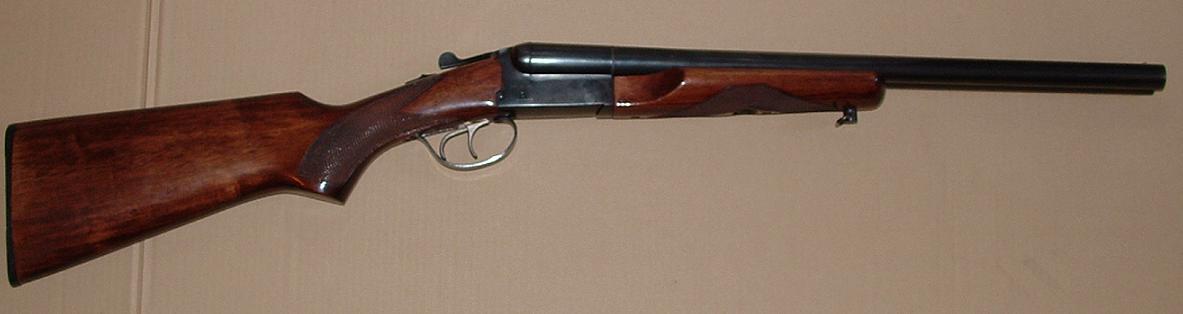
Perfect, Episode Twenty-seven ♦ Twelve Gauge
Out on the plains, George meets a new, best friend. Can he use it when he needs to?
Curious about the hardware? Don’t know what a coach gun is or how it differs from a shotgun? Check out the Stoeger Coach Gun Supreme (good photo, just copyright protected), Cowboy Action Shooting or there is ALWAYS Wikipedia! (the above photo taken by “Commander Zulu" and used there). Such images were inspiration when writing this episode.
16 April 2014
Showing
Every writer has loathed the phrase "show don't tell" at some point in developing the craft. It can be one of the harder skills to master - but it takes so long to show something when I can just tell the reader what's happening. True.
Writers need to balance many things, and yes, moving the story along is one of those things. Just don't do it at the expense of your reader's connection with the story nor insult their intelligence. Show them the world and what's happening in it. Let them decide what it means. That's the way I like to think about showing instead of telling.
I really like this quote from Immediate Fiction: A Complete Writing Course by Jerry Cleaver:
Showing: Are the characters acting and talking as much as possible? Are you creating a moment-by-moment, word-for-word experience that's happening right before our eyes with no general statements or summaries? Showing means we always have something we can picture in our mind. It's visual and almost always scene with dialogue.
What can be simpler than that? I mean, in terms of understanding what we need to be doing in our fiction.
Subscribe to:
Posts (Atom)